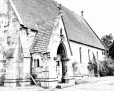
is inextricably also part of the Church of Scotland. When Martin Luther published his ninety-five theses in 1517 in Wittenberg, which was then part of the Holy Roman Empire, little did he realise the effect of pushing back against the established Church.
This sparked the period known as the ‘Reformation’ and sparked a severance with the papacy. Roman Catholicism ceased to be the established faith in Europe. The period that followed should be described as a series of reformations, rather than the idea that there was one reformation that reverberated across Europe. Across the region, there were a series of reformations. Within eight years, Scotland was feeling the effects of the English Reformation, with Henry VIII having taken the title ‘Defender of the Faith’ in 1521.
| 1528 – The first martyr of the Scottish Reformation was Patrick Hamilton who was burned at the stake in 1528 for supporting Martin Luther’s teachings.1 |
| 1560 – The Scottish Parliament removed the Pope’s authority in Scotland, forbade the Mass, and restricted the administration of the Sacraments to those admitted as preachers. The General Assembly came into being, with ‘superintendents’ replacing bishops. As an aside, the Roman Catholic Church ceased to be the ‘Established Church; and for almost three hundred years, the word ‘bishop’ almost always referred to what becomes the ‘Episcopal Church’. Roman Catholicism did not have dioceses in Scotland until 1848.2 Several of the pre-Reformation bishops, joined the Reformers, and thereby continued to have authority in their former dioceses. There was still a single Church in Scotland, but its allegiance fluctuated between Episcopacy and Presbyterianism. |
| 1582 – The Church of Scotland rejected episcopal governance, and what would eventually become the Scottish Episcopal Church came into being as a separate church tradition.3 Sometimes continuity was provided by a priest in Episcopal orders, so the switch between the two was not clear-cut. Further disputes meant that Presbyterian governance was in control from 1592-1610. This switched to Episcopacy 1610-1638; back to Presbyterianism 1638-1661; and finally Episcopacy 1661-1688. By 1688, there was a broad pattern of church identity in Scotland. According to E. Luscombe, the pattern was thus: predominantly Episcopalian north of the R. Tay; predominantly Presbyterian south of the R. Forth, and roughly equal between the two rivers.4 |
| 1689 – proved a year of many events. William, Prince of Orange took the crown, and sought allegiance with the Scottish bishops; James VII forfeited the Scottish Crown; there was the first Jacobite rising; the Presbyterian Church became the established Church of Scotland, and Episcopacy was disestablished. There were promises that the Episcopal Church would be secure and continue as the Church of Scotland if the bishops would support the new king and queen as the English bishops were doing. The Scottish bishops said they could not break their oaths of allegiance to James VII. Through a declaration that James had forfeited his right to the throne, the Crown of Scotland was offered to Mary, and her husband, William. Clergy were ordered to pray for the monarchs, and William in accepting the Crown, made it clear his intention to allow no persecution. As much of northern Scotland remained opposed to rule by Wiliam and Mary, this led into the first Jacobite Rising. Later in the same year, a petition was received requesting a meeting of the General Assembly to heal division and settle the governance of the Church. Presbyterians opposed this as they would have been outnumbered six to one by Episcopalians. However, the Westminster Confession of Faith was ratified and the Presbyterian form of government of the Church was established. Many Episcopal priests remained in charge of parish churches with the support of their people.5 |
| 1690 – The first Penal Law was passed that required all clergy to subscribe to the Westminster Confession. |
| 1693 – The second Penal Law required all holding office to swear that William was king in law and in fact. |
| 1695 – The third Penal Law is passed – The Act to Forbid Deprived Episcopal Clergy – prevents Episcopal clergy from conducting marriages or baptisms. |
| 1702 – It was not until 1702 when King William died and was succeeded by his sister-in-law, Anne (James VIII’s second sister), that Episcopalians were granted the right to be protected in the peaceful exercise of religion. |
| 1712 – The fourth penal law – The Act of Toleration – was passed in 1712, declared it lawful for Episcopalians to meet for worship using the Book of Common Prayer, abolished the 1695 Act against irregular baptisms and marriages, and required both episcopalian clergy and parish ministers to take an oath of allegiance to Queen Anne, thus renouncing any Jacobite allegiances. Both English and Scottish liturgies were developed and used at different periods by different groups. The 1712 Toleration Act effectively acknowledged the existence of Episcopalians in Scotland as a separate church from the Church of Scotland, but more importantly it began the division between the ‘qualified’ clergy, who swore allegiance to Anne and her Hanoverian successors, and the ‘nonjurors’ who remained loyal to the exiled Stuarts. No Scottish bishop qualified and only a few clergy.6‘Qualified’ congregations used the English Prayer Book and were ministered to by clergy who ‘qualified’ under the Act of Toleration. The chapels bowed to the political reality of the time whereas the rest of the Episcopal church would not accept the legitimacy of the Revolution government and its Hanoverian successors. The Qualified chapels could not legally submit to the Scottish bishops, while in turn, these bishops saw them as ‘disloyal appendages of an alien establishment, namely the Church of England.7 The English bishops could not or would not take responsibility for them as that would violate the Act of Union between Scotland and England. |
| 1715 – More congregations became ‘qualified’ after the second Jacobite rising in 1715, and in response to penal restrictions. The penal restrictions came into force by the government due to the Jacobite army being almost entirely Episcopalian. In 1719, it became unlawful for clergy who did not pray for King George and take the abjuration oath to minister to more than eight people.8 |
| 1746 – After the third Jacobite rebellion in 1745, a fresh set of penal legislation prohibited Episcopal worship unless the clergymen had taken the oaths of allegiance and abjuration, prayed for the monarch and royal family by name in public worship, and registered their letters of orders. No more than four worshippers in addition to a family could gather, and worshippers in places which broke the law were also punishable. |
| In the winter of 1748-49 the priests from Muchalls, Stonehaven and Drumlithie were imprisoned in Stonehaven Tolbooth for ministering to congregations other than their own families. Some Episcopal congregation members from the landed and merchant classes decided they could no longer continue to be regarded as nonjurors and further Qualified chapels were established between 1749 and 1760 in Dundee, Brechin, Stonehaven, and Arbroath (in addition to that founded at Montrose in 1712).9This was further complicated when only clergy who had letters of orders from English or Irish bishops were considered ‘qualified’ , and clergy originally ordained by Scottish bishops were rejected even though they had submitted to the oaths required.10 |
| 1760 – In 1760, George III ascends to the throne. A relaxation of the penal laws begins. Services begin to be held more openly. The Scottish Communion Office is published in 1764. The Liturgy contains a long prayer of invocation of the Holy Spirit and has both Celtic and Eastern Orthodox influences. Its title page states, revealing the mind-set of the bishops, that it is “The Communion Office of the Church of Scotland.”11 |
| 1784 – Samuel Seabury abandons his attempts in England to be consecrated as a bishop in the newly independent United States and comes to Scotland. He is consecrated on November 14th, 1784, in Aberdeen as the first bishop for United States by Robert Kilgour, Bishop of Aberdeen and Primus; Arthur Petrie, Bishop of Moray; and John Skinner, Co-adjutor Bishop of Aberdeen. It is the beginning of the world-wide expansion of the Anglican Communion.12 |
| 1792 – At the second attempt the Scottish Episcopalians Relief Act is passed by both Houses of Parliament and the repression of the Church ends. However, the last hundred years have taken their toll – in 1689 there was a bishop for thirteen of the fourteen dioceses and six hundred clergy ministering to 66% of the population of Scotland. In 1792 there are four bishops and forty clergy ministering to 5% of the population.13 |
At this point, we turn to the history of St Laurence’s, Laurencekirk and its relevance to the Scottish Episcopal Church.